
Today, there is little need to change a textile’s color. If you want something in a certain color, you just buy it in that color. But as a witch, I’ve found plant dyes to be a powerful ritual and spell crafting element. The way I see it, this is because throughout the year on solstices and equinoxes and through celestial events like eclipses, we are observing the changing quality of light around us. And what is color but different wavelengths of light refracting at different angles, our eyes taking in various qualities of light and translating those qualities into colors? To change something’s color is to say “I am an architect of light,” and claiming that power to change reality is the essential action of witchcraft. And doing all that through a deep relationship with plants just draws us even closer into the rhythm of the natural world, this planet that holds us and this land that loves us.
There are many ways to use plants, fungus, and other natural materials to make dyes. Picking which plant to work with will depend on your goal in spell crafting, and what that plant means to you. For example: I frequently dye with oak galls. These are round formations of pure tannin that occur when certain species of wasps lay eggs on the branch of an oak tree. This causes a reaction that leads the tree to create excess tannin around the eggs, creating a round ball of “dyer’s gold” – our gall. The gall protects the larvae, giving them a little home to grow in until they bore their way out of the gall and fly away (when collecting galls, always be sure there are plenty of holes in them, and keep them outside or in a sealed container just in case not all the wasps have vacated). The gall then drops to the ground, and you can find them under oak trees if you look closely.
What do oak galls mean? We have the spirit of symbiosis between the wasp and the tree. We have the spirit of protection, and of leaving comfort and safety behind when the time is right for growth and evolution. We have the spirit of all the ways humans have worked with this material throughout time – many historical documents were written with ink made from oak galls. We have the spirit of oak itself. Another element to this is that when dyeing with oak galls, you have the option of adding iron to the process as a modifier or a second dip bath after the primary dye with the galls. Iron tea is as simple as rusty nails steeping in a vinegar and water solution for a few days. Dilute that, and you have a modifying bath that “saddens” or darkens the color of oak gall dye instantly. This means you have the added spirit of iron, of direction and purpose and laying down a magnetic line for spirit to follow. For me, this makes oak galls with an iron modifier particularly good for dye spells.
For the purpose of the example, let’s say we are choosing the spirit of protection and safety for our spell crafting. Let’s say you are having a hard time adjusting to the work culture in a new job, you just need something to help you feel secure and safe while working. Especially if this is just a job you need right now, and eventually you want to leave it for something better.
You could make a mojo bag. If you have a bag that is made of natural fibre like cotton, linen, or wool, you can dye it with oak galls to give it that spirit of protection and safety until the time is right to move on. You could even use a bit of the gall itself as a spell crafting element inside the bag.
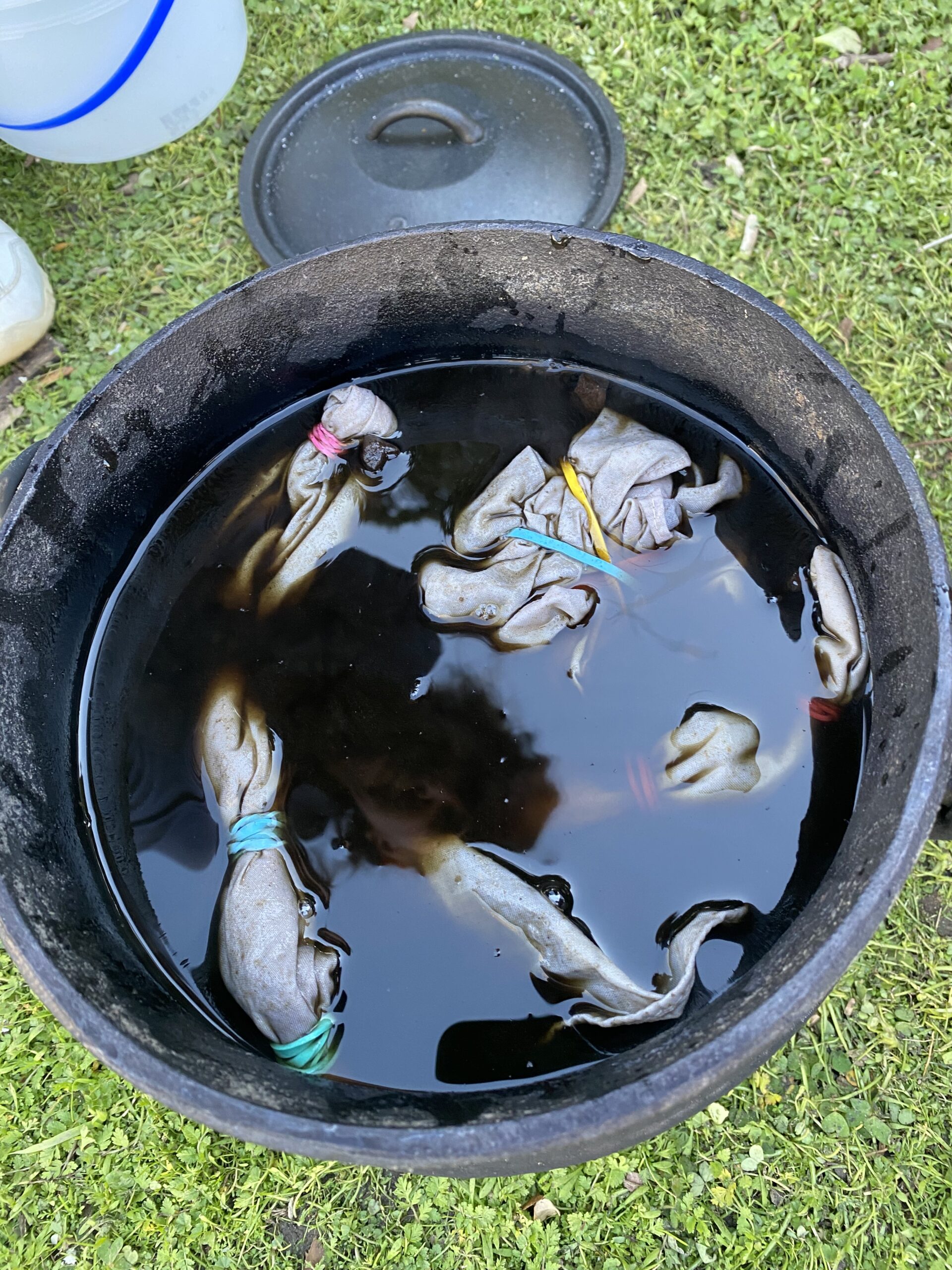
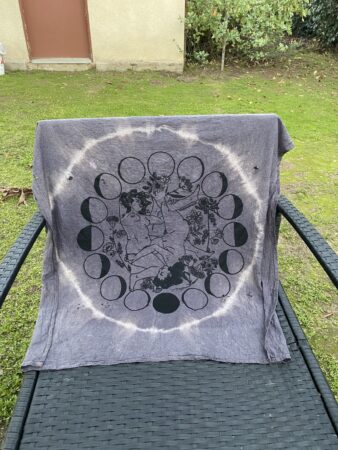
Dyeing for magical purposes doesn’t just have to be with plants. You can get the same magical feeling using any dye, Rit or otherwise – the feeling of wonder, excitement, anticipation, and awe at your own creation is strong when you finally fish your prepared item out of the pot, snip off any rubber bands you’ve used to create a resist pattern like I have here with a white circle around the motif, rinse, and unfurl.
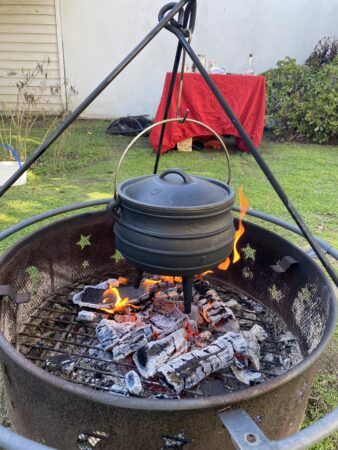
That feeling accompanies any good working anyway, but the process of dyeing adds more time and energy into the spell. You’re working with water, so there’s the opportunity to add magical or sacred waters as well: moon water, rain waiter, snowmelt, river water, seawater, whatever is right for your spell. If you have a cauldron big enough, brewing the dye pot in the cauldron adds the power of creation.
You can dye yarn to use in knitting, crochet, or weaving spells. You can dye ritual robes. You can dye fabric to make poppets. You can dye paper. You could also make ink to use for sigils or other writing. Your imagination and creativity are the limit!
